
Welcome to our comprehensive guide on evaluating the worth of LASIK surgery for your vision needs. As the landscape of eye care continues to evolve, many individuals are considering whether this popular procedure is a prudent investment for their personal and visual health.
In this article, we will delve into the intricacies of LASIK, starting with a detailed cost breakdown and how it aligns with your vision goals. We’ll also explore the potential risks and benefits associated with the surgery, share patient experiences that illustrate its life-changing impacts, and discuss financial options to make the procedure more accessible.
Ultimately, our aim is to provide you with the information you need to make an informed decision about whether LASIK is the right choice for you. Join us on this journey to clearer vision!
Understanding The Cost Breakdown Of Lasik Surgery
When considering evaluating whether Lasik surgery is worth the cost, it’s essential to dissect the various components that contribute to the overall price. Understanding these components can provide clarity on what you are truly investing in and help you make an informed decision.
The total cost of Lasik surgery generally includes several major factors:
- Surgeon’s Fees: This is typically the largest expense. Prices can vary based on the surgeon’s experience, qualifications, and reputation.
- Facility Fees: The cost of the surgical facility where the procedure takes place is also factored in. Higher-end, more equipped facilities may charge more.
- Pre-operative and Post-operative Care: Consultations, follow-up visits, and any necessary tests contribute to the overall expense.
- Type of Procedure: The specific technique used (e.g., LASIK, PRK, SMILE) can significantly impact the cost. Advanced technologies or custom treatments may come at a premium.
- Medications: Post-surgery medications, including eye drops prescribed for aftercare, can add to the overall expense.
- Diagnosis and Screening: Preliminary testing to assess your suitability for the procedure may incur additional costs.
According to various estimates, the total price per eye for Lasik surgery can range from $2,000 to $3,000, although this can vary widely depending on geographic location and specific clinic offerings.
Many clinics offer financing options or payment plans, which can make the procedure more manageable. Additionally, some insurance plans may cover a portion of the cost. If you’re seriously considering Lasik, it can be beneficial to explore these financial avenues as part of your comprehensive assessment of evaluating whether this surgery is right for you.
Evaluating Whether Lasik Aligns With Your Vision Goals
When considering Lasik surgery, it’s crucial to assess how well it aligns with your personal vision goals and expectations. Evaluating whether the procedure fits your lifestyle and long-term objectives can help ensure that you make a well-informed decision.
First, think about your current vision situation. Are you dealing with nearsightedness, farsightedness, or astigmatism? Understanding the specific issues you face is essential for discussing realistic outcomes with your eye care professional. Each type of refractive error can result in different satisfaction levels after surgery.
Next, set clear goals for what you hope to achieve with Lasik. For example, do you want to eliminate your need for glasses and contact lenses completely, or are you merely looking for a reduction in dependency? Identifying your priorities will not only help you discuss your desires with your doctor but also manage your expectations post-surgery.
It’s also important to assess your lifestyle and how vision correction plays a role in it. If you lead an active lifestyle, you might find that having clear vision without glasses significantly enhances your activities, such as sports or outdoor adventures. Conversely, if you work in a profession where excellent vision is critical, it may be more important for you to achieve the best possible correction through Lasik.
Consider the age factor and the stability of your vision prescription. For most candidates, being at least 18 years old with a stable prescription for at least a year is a prerequisite for Lasik surgery. Discussing these aspects with a qualified eye surgeon can ensure that your goals are realistic given your individual circumstances.

evaluating whether Lasik aligns with your vision goals goes beyond just the potential cost; it encompasses your lifestyle needs, current vision issues, and long-term expectations. Take the time to reflect on these factors before making a decision, as this will significantly influence your experience and satisfaction with the procedure.
Potential Risks And Benefits Of Lasik Surgery
When evaluating whether to undergo Lasik surgery, it’s essential to weigh both the potential risks and benefits carefully. Understanding these aspects can help you make a more informed decision regarding your eye health and vision correction.
Benefits of Lasik Surgery
- Improved Vision: Many patients achieve 20/25 vision or better after the procedure, significantly reducing their dependence on glasses or contact lenses.
- Quick Recovery: Most individuals notice an improvement in their vision within a day, with many returning to normal activities within a week.
- Permanent Results: For most patients, the results are lasting, though some may require touch-up treatments as they age.
- Enhanced Lifestyle: Lasik allows for greater freedom and convenience in daily activities, such as sports and travel, without the hassle of glasses or contacts.
Risks of Lasik Surgery
- Possible Side Effects: Patients might experience glare, halos, or double vision, particularly at night. These symptoms may diminish over time but can be bothersome initially.
- Under or Over-Correction: In some cases, the surgery may not fully correct vision or could lead to over-correction, requiring additional procedures.
- Dry Eyes: Post-surgery, patients can experience increased dryness, which may require treatment and can affect quality of vision.
- Long-Term Effects: While rare, some patients develop complications that could affect their vision in the long run.
evaluating whether the benefits of Lasik outweigh the potential risks is crucial. Consulting with a qualified eye care professional can provide valuable insights tailored to your specific circumstances, enhancing your decision-making process.

Patient Experiences: Evaluating Whether Lasik Changed Lives
For many individuals considering Lasik surgery, personal experiences can play a significant role in the decision-making process. Hearing from patients who have undergone the procedure may provide insight into the potential impact on one’s vision quality and overall lifestyle. Below, we explore a selection of patient stories that showcase how evaluating whether Lasik is right for you might be influenced by the experiences of others.
- Transformation Through Clarity: Many Lasik patients report a dramatic improvement in vision clarity. For instance, Jane, a 34-year-old teacher, shared that after her procedure, she could see the board without glasses for the first time in years. This change not only enhanced her teaching experience but also boosted her confidence in social situations.
- Freedom From Contact Lenses: Another common theme among patients is the relief from the hassles associated with glasses or contacts. Mike, an avid runner, mentioned how the absence of lenses allowed him to enjoy his outdoor activities without the fear of losing or damaging his eyewear. He felt that Lasik greatly enriched his active lifestyle.
- Initial Hesitations: It’s not uncommon for potential patients to express anxiety or skepticism before undergoing the procedure. Sarah, who was initially apprehensive about surgery, recounted how thorough consultations eased her fears. She now emphasizes the importance of taking that leap of faith, as her post-surgery quality of life has significantly improved.
- Long-Term Satisfaction: Several years after surgery, many patients, like Tom, still marvel at their results. Tom, who underwent the procedure five years ago, stated that his vision remains sharp and he feels grateful for the decision. Long-term satisfaction stories can be particularly reassuring for those still evaluating whether the cost and commitment of Lasik are worth it.
- Varied Experiences: While many patients share positive experiences, it’s essential to acknowledge that outcomes can vary. A small group of individuals might encounter complications or less-than-expected results, which reinforces the importance of thorough research and discussions with healthcare providers when considering the procedure.
Patient experiences reveal a wide range of outcomes that may help future candidates in their decision-making process. These stories highlight that evaluating whether Lasik is worth undertaking often comes down to individual expectations and lifestyle needs. Whether the surgery results in dramatic life changes or merely satisfies basic vision correction, understanding these personal accounts can provide valuable context for your own considerations.
Financial Options For Making Lasik More Affordable
When considering evaluating whether Lasik surgery is within your financial reach, it’s crucial to explore the various financing options available. Understanding these can help you manage the costs more effectively and ensure you make an informed decision about your vision correction.
- Health Insurance Coverage: While many insurance plans do not cover Lasik surgery, some offer partial benefits or discounts. Check with your provider to understand your options.
- Flexible Spending Accounts (FSA): If your employer offers an FSA, you can use pre-tax dollars to pay for Lasik. This can significantly reduce the overall cost.
- Health Savings Accounts (HSA): Similar to an FSA, an HSA allows you to save pre-tax money for medical expenses, including Lasik surgery.
- Payment Plans: Many Lasik centers offer in-house financing options that allow you to pay for the procedure in installments over time. Be sure to inquire about interest rates and terms.
- Credit Options: Consider using a credit card with a promotional interest-free period or applying for medical credit cards specifically designed for healthcare expenses. Just be cautious about accruing high-interest debt.
- Discount Programs: Some Lasik facilities offer discount programs for military personnel, students, or members of certain organizations. Always ask if any discounts are available.
By exploring these options, you can better manage the financial aspect of your vision correction journey, ensuring that your choice to proceed with Lasik surgery aligns with your financial comfort and vision goals.

Frequently Asked Questions
What is LASIK surgery?
LASIK (Laser-Assisted In Situ Keratomileusis) is a popular eye surgery that uses lasers to correct refractive vision problems such as myopia, hyperopia, and astigmatism.
What are the typical costs associated with LASIK?
The cost of LASIK varies widely depending on factors like the surgeon’s experience, the technology used, and the geographic location, but it generally ranges from $2,000 to $3,000 per eye.
Does LASIK have long-term benefits?
Many patients experience improved vision for years after LASIK, often reducing or eliminating their reliance on glasses or contact lenses.
Are there financing options available for LASIK?
Yes, many clinics offer financing plans, health savings accounts (HSAs), and flexible spending accounts (FSAs) to help patients manage the costs of LASIK treatment.
What are the potential risks or side effects of LASIK?
While LASIK is generally safe, possible side effects can include dry eyes, glare, halos around lights, and in rare cases, vision loss.
How do I determine if LASIK is right for me?
A comprehensive eye exam with an ophthalmologist can help determine your candidacy for LASIK, taking into account factors like your prescription, eye health, and lifestyle.
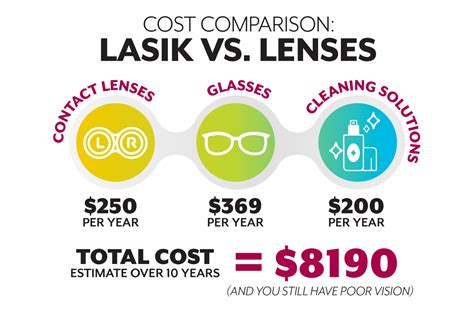
Is LASIK cheaper in the long run compared to glasses or contacts?
Many people find LASIK to be a cost-effective option over time, as it eliminates the ongoing expenses of glasses, contact lenses, and their associated maintenance.
Leave a Reply