
Are you considering LASIK eye surgery to enhance your vision? With advancements in technology, there are several types of LASIK procedures available, each offering unique benefits tailored to your specific needs. However, understanding these various options and their associated costs can be daunting.
In this article, we will clarify the basics of LASIK eye surgery, delve into the different types of LASIK procedures, and provide a detailed cost breakdown. We will also explore the factors that influence LASIK surgery costs and outline the expected outcomes following each procedure.
Whether you’re seeking clearer vision or simply curious about your options, our comprehensive guide aims to help you make an informed decision on your eye health journey. Let’s get started!
Explaining The Basics Of LASIK Eye Surgery
Explaining The LASIK eye surgery involves understanding a few core concepts that contribute to its growing popularity as a vision correction solution. LASIK, which stands for Laser-Assisted In Situ Keratomileusis, is a refractive surgery designed to improve vision by reshaping the cornea, the clear front part of the eye. Through this procedure, light entering the eye is effectively focused onto the retina, resulting in clearer vision without the need for glasses or contact lenses.
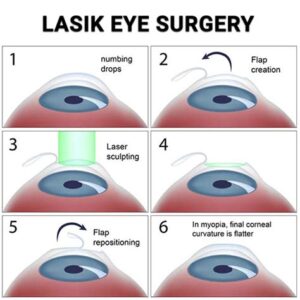
The LASIK procedure typically follows a standard approach, which includes the following steps:
- Preparation: Before surgery, a thorough eye examination is conducted to assess factors such as corneal thickness, pupil size, and overall eye health.
- Creating a Flap: A specialized laser or a surgical tool called a microkeratome is used to create a thin flap in the cornea.
- Corneal Reshaping: The excimer laser is then used to remove microscopic amounts of corneal tissue, allowing for precise reshaping tailored to the individual’s vision needs.
- Repositioning the Flap: Finally, the corneal flap is gently placed back over the treated area, where it adheres naturally without the need for stitches.
The entire procedure typically lasts about 15 minutes per eye, and most patients experience minimal discomfort and a quick recovery time. Explaining The procedure comprehensively conveys the innovative technology and techniques employed in LASIK surgery, emphasizing its efficiency and effectiveness in transforming lives through better vision.
Different Types Of LASIK Procedures Explained
When it comes to explaining the various types of LASIK eye surgery, it’s important to understand that each procedure is designed to address specific vision problems while utilizing advanced technology. Here are the most common types:
- Traditional LASIK: This is the standard procedure where a microkeratome, a surgical instrument, is used to create a thin flap in the cornea. The underlying tissue is then reshaped using a laser to correct refractive errors.
- Wavefront LASIK: This advanced procedure employs wavefront technology to map the eye and provide a detailed analysis of its unique characteristics. It can correct higher-order aberrations, leading to improved night vision and greater precision in results.
- SMILE (Small Incision Lenticule Extraction): A minimally invasive procedure where a femtosecond laser is used to create a small lenticule within the cornea, which is then removed through a tiny incision. SMILE is known for preserving corneal integrity and reducing the risk of dry eyes.
- PRK (Photorefractive Keratectomy): While not technically a LASIK procedure, PRK is similar in purpose. It involves removing the outer layer of the cornea before reshaping it with a laser. This is often recommended for patients with thinner corneas.
- Custom LASIK: This variation tailors the LASIK procedure to the particular needs of the patient based on detailed pre-operative measurements. It can include wavefront technology to further enhance visual results.
Understanding the differences among these procedures is crucial for making an informed choice regarding LASIK surgery. Each type has its own benefits and may be more suitable for different eye conditions and patient preferences, reinforcing the necessity of consulting with a knowledgeable eye care professional.
Cost Breakdown Of LASIK Eye Surgery Options
Understanding the costs associated with LASIK eye surgery is crucial for anyone considering the procedure. The prices can vary significantly based on various factors, including the type of LASIK procedure, the technology used, and the surgeon’s experience. Below is a detailed breakdown of what to expect when budgeting for explaining the costs of LASIK surgery.
1. Traditional LASIK Costs
Traditional LASIK is often the most affordable option. The average cost typically ranges from $2,000 to $2,500 per eye. This price usually includes pre-operative evaluations, the surgery itself, and post-operative follow-ups.
2. Bladeless LASIK Costs
This procedure utilizes a laser to create the corneal flap, eliminating the need for a blade. As a result, the cost is generally higher, averaging between $2,500 and $3,500 per eye. Most clinics include the same services as traditional LASIK.
3. Custom LASIK Costs
Custom LASIK involves a personalized treatment plan based on a detailed analysis of the patient’s eyes. Prices for this advanced technique can range from $2,500 to $4,000 per eye, depending on the specific technology used.
4. Wavefront LASIK Costs
This technology offers a more precise treatment by mapping the eye’s unique imperfections. The cost is typically in the range of $2,500 to $5,000 per eye, making it one of the more premium options available.
5. Additional Costs
Aside from the surgery itself, patients should also consider additional expenses that may arise, such as:
- Pre-operative consultations
- Post-operative care and follow-up visits
- Medications (e.g., eye drops)
- Possible enhancement procedures if needed
Overall, while the initial costs of LASIK eye surgery can seem daunting, many find that the long-term benefits, such as reduced need for glasses or contact lenses, make it a worthwhile investment. Always consult with a qualified specialist to get an accurate estimate tailored to your specific needs.

Factors Influencing LASIK Surgery Costs Explained
The cost of LASIK eye surgery can vary significantly based on several key factors. Understanding these factors can help patients make informed decisions and better prepare for the financial aspects of the procedure. Here’s a breakdown of the primary elements that influence LASIK surgery costs:
- Technology Used: Different types of LASIK procedures involve various technologies, such as Traditional LASIK, Wavefront-guided LASIK, and Contoura Vision, each with different price points. Advanced technologies typically result in higher costs due to the precision and customization they offer.
- Surgeon’s Experience: The qualifications and experience of the surgeon can greatly impact the pricing. Highly experienced surgeons with a strong track record of successful operations may charge more for their expertise.
- Geographic Location: The cost of living in the area where the surgery is performed can affect pricing. Urban centers with a higher cost of living generally have higher surgical fees than rural areas.
- Clinic Reputation: Recognized clinics that have received positive reviews and accolades may charge more for their services. Patients are often willing to pay a premium for reputable institutions with proven results.
- Pre-operative and Post-operative Care: Comprehensive care surrounding the surgery, such as consultations, follow-up appointments, and any necessary medications, can add to the overall cost.
- Insurance Coverage: While many insurance plans do not cover LASIK, it’s essential to check if any part of the process is covered. Some facilities may offer financing options to help manage costs.
- Customization Level: Options for customizing the procedure, such as individualized treatment plans based on specific vision needs, can increase the expense but often lead to better outcomes.
When considering LASIK, it’s crucial for patients to evaluate these factors carefully. Obtaining multiple quotes and thoroughly researching local options can help identify the best choices for both quality of care and cost-efficiency. Overall, by explaining the factors that impact LASIK surgery costs, patients can navigate the financial landscape with greater confidence.
Expected Outcomes After Different Types Of LASIK
When Explaining The different types of LASIK eye surgery, it’s important to understand the expected outcomes for each procedure. Patients generally seek LASIK for improved vision quality, reduced dependence on glasses or contact lenses, and the overall convenience of better eyesight.
Here’s a breakdown of the expected outcomes based on the various types of LASIK procedures:
- Conventional LASIK: Most patients report significant improvement in vision, with about 90% achieving 20/25 vision or better. However, some may still require glasses for certain activities.
- Wavefront-guided LASIK: This advanced technique not only corrects nearsightedness, farsightedness, and astigmatism but also addresses higher-order aberrations, leading to sharper vision and reduced glare or halos. Most patients experience exceptional visual clarity.
- Topography-guided LASIK: Similar to wavefront technology, this method customizes the treatment based on the unique shape of the cornea, yielding results that may surpass those achieved with standard LASIK methods. Many patients report enhanced contrast sensitivity and overall visual satisfaction.
- Femtosecond LASIK (Bladeless LASIK): This technique utilizes laser technology for both the corneal flap creation and vision correction, leading to faster recovery times and less discomfort. Patients often achieve rapid improvements in vision within days.
While these outcomes are promising, individual results may vary based on factors such as pre-existing eye conditions, the degree of refractive error, and adherence to post-operative care instructions. Consultation with an experienced LASIK surgeon is crucial to tailor expectations based on personal eye health.

Frequently Asked Questions
What is LASIK eye surgery?
LASIK (Laser-Assisted In Situ Keratomileusis) is a popular refractive eye surgery that corrects vision problems like myopia, hyperopia, and astigmatism by reshaping the cornea using a laser.
What are the different types of LASIK surgeries?
The main types of LASIK surgeries include Traditional LASIK, Wavefront LASIK, and PRK (Photorefractive Keratectomy). Each type has different techniques and benefits.
How does Traditional LASIK differ from Wavefront LASIK?
Traditional LASIK uses standard measurements to reshape the cornea, while Wavefront LASIK employs advanced technology to create a custom treatment based on detailed scans of the eye.
What is the primary advantage of Wavefront LASIK?
The primary advantage of Wavefront LASIK is that it can provide a higher level of precision and potentially better visual outcomes, especially for people with higher degrees of refractive error.
What factors influence the cost of LASIK surgery?
Factors that influence the cost of LASIK surgery include the type of procedure, the technology used, the surgeon’s experience, the location of the clinic, and any pre-surgery evaluations required.
On average, what is the cost range for LASIK surgery?
On average, LASIK surgery costs between $2,000 to $3,000 per eye, but this can vary significantly based on the factors mentioned earlier.
Are there financing options available for LASIK surgery?
Yes, many clinics offer financing options, payment plans, or partnerships with third-party financing companies to help patients manage the cost of LASIK surgery.
Leave a Reply